
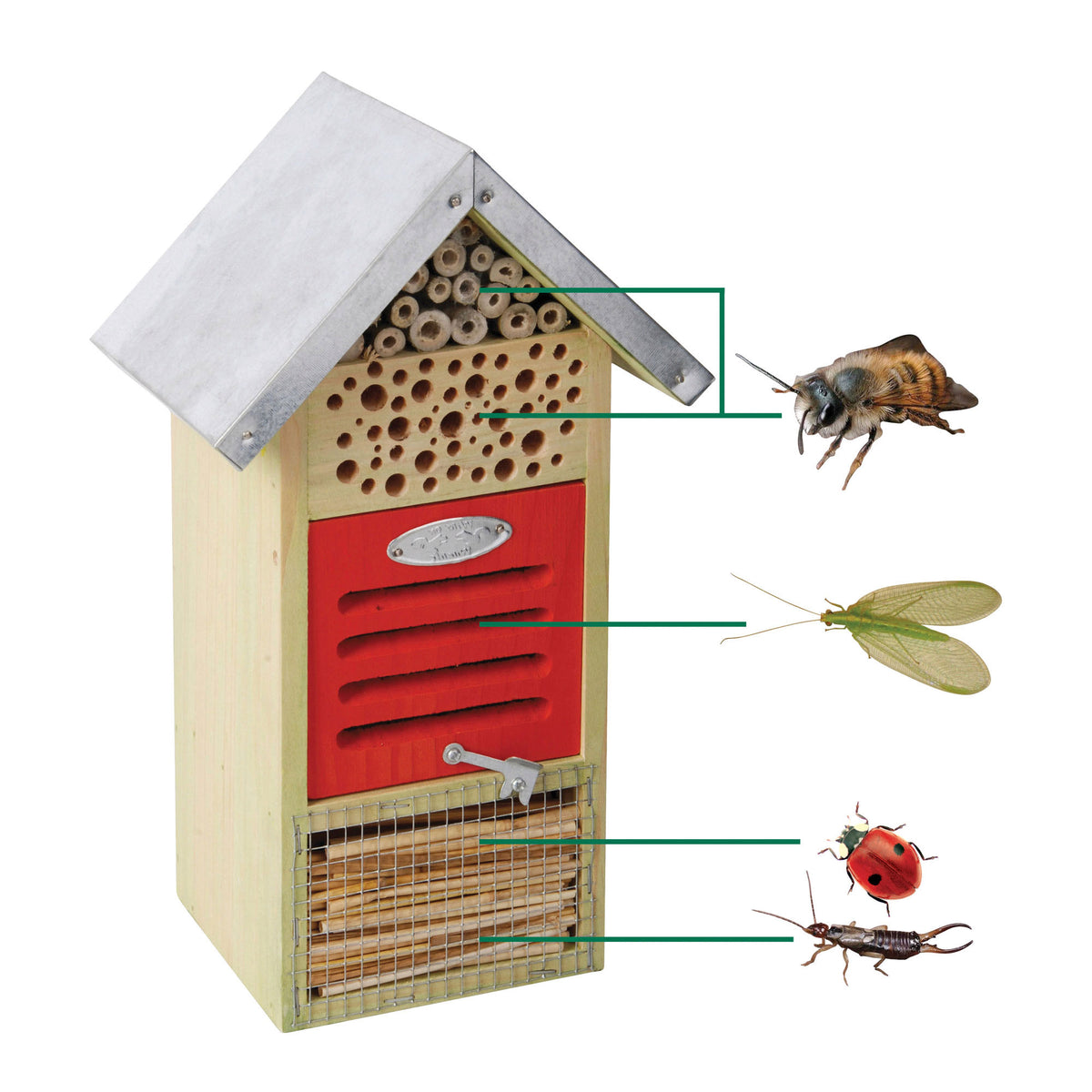
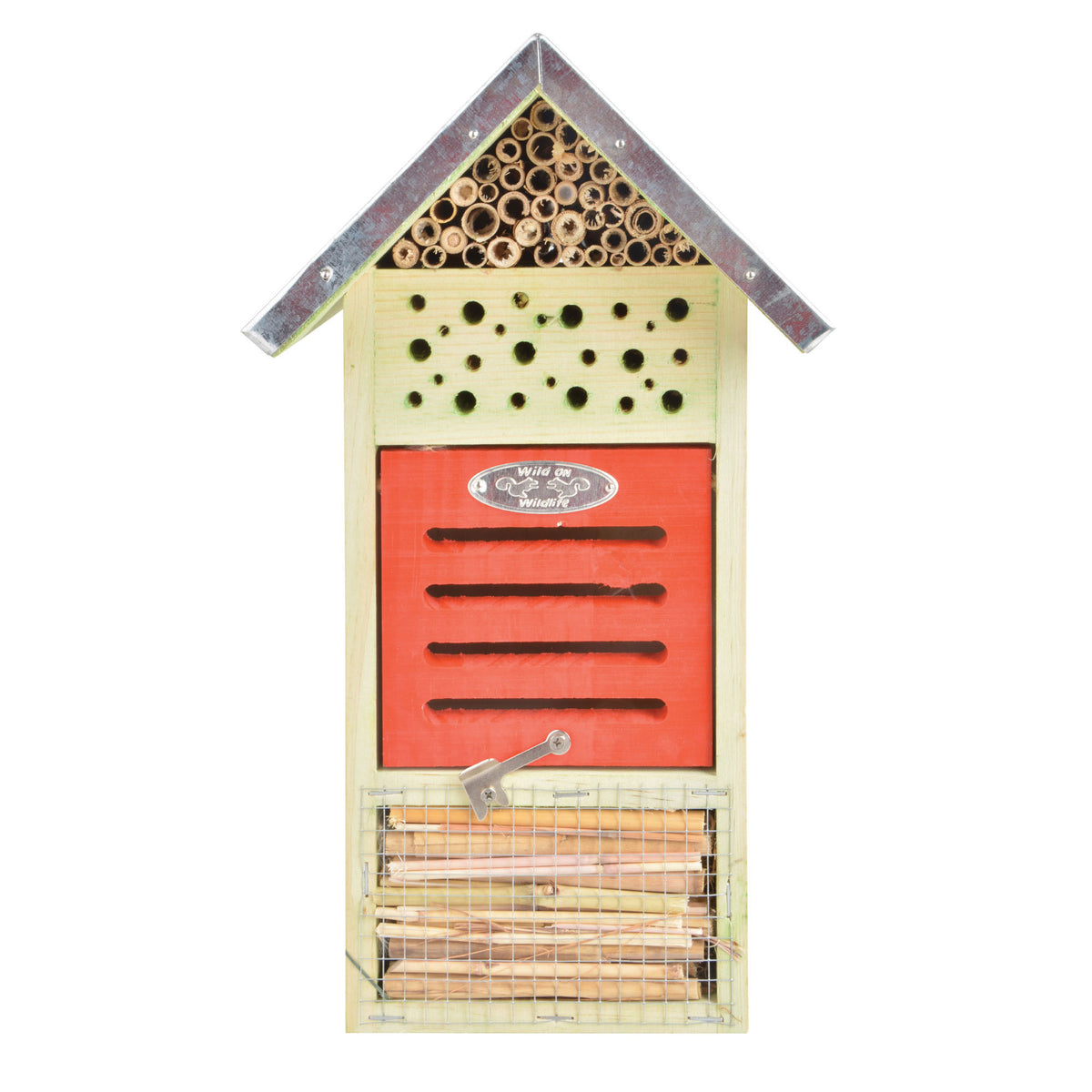
Insects take care of many tasks in our gardens. They pollinate plants, function as a natural pest control and are an essential component in organic gardening. With this insect hotel, you will be giving a wide variety of insect species a chance to nest and hibernate. The natural homes of many insect species are now threatened, due to changes in their environment and this is an excellent way to help and protect them. The centre compartment offers protection and a home to the common green lacewing, ladybird and earwigs. The red colour of the door will attract the lacewings in particular. Bees often hide in hollow sticks. Each type of bee requires a different size hole (or tube). The orchard bee prefers a diameter between 3 and 7 mm, while the yellow-faced bee would rather it be 2 to 4 mm. Wild bees cover their tubes with loam. The holes in the wood can serve as nests for many different insects.
- suitable for various types of wild bees, ladybirds, green lacewings and earwigs
- keyhole opening
Insect hotel Brown
Paiement sécurisé
Plus de 75 ans d'expertise
Avis clients vérifiés ★★★★☆
Paiement en 3x ou 4x avec Klarna et Paypal
Details
Colour:
Brown
Fragrant
Guarantee:2 years
Additional information
📦 Delivery
🔁 Returns
This product can be returned within 14 days
Return by post, at the customer's expense
The product must be unused and in its original packaging
Description
Insects take care of many tasks in our gardens. They pollinate plants, function as a natural pest control and are an essential component in organic gardening. With this insect hotel, you will be giving a wide variety of insect species a chance to nest and hibernate. The natural homes of many insect species are now threatened, due to changes in their environment and this is an excellent way to help and protect them. The centre compartment offers protection and a home to the common green lacewing, ladybird and earwigs. The red colour of the door will attract the lacewings in particular. Bees often hide in hollow sticks. Each type of bee requires a different size hole (or tube). The orchard bee prefers a diameter between 3 and 7 mm, while the yellow-faced bee would rather it be 2 to 4 mm. Wild bees cover their tubes with loam. The holes in the wood can serve as nests for many different insects.
- suitable for various types of wild bees, ladybirds, green lacewings and earwigs
- keyhole opening
Insect hotel Brown
Produits similaires


Bee House Brown
each
Currently unavailable


Bumblebee house Brown
1x 29,2 x 17,3 x 15,4 cm
Currently unavailable


Currently unavailable
Currently unavailable

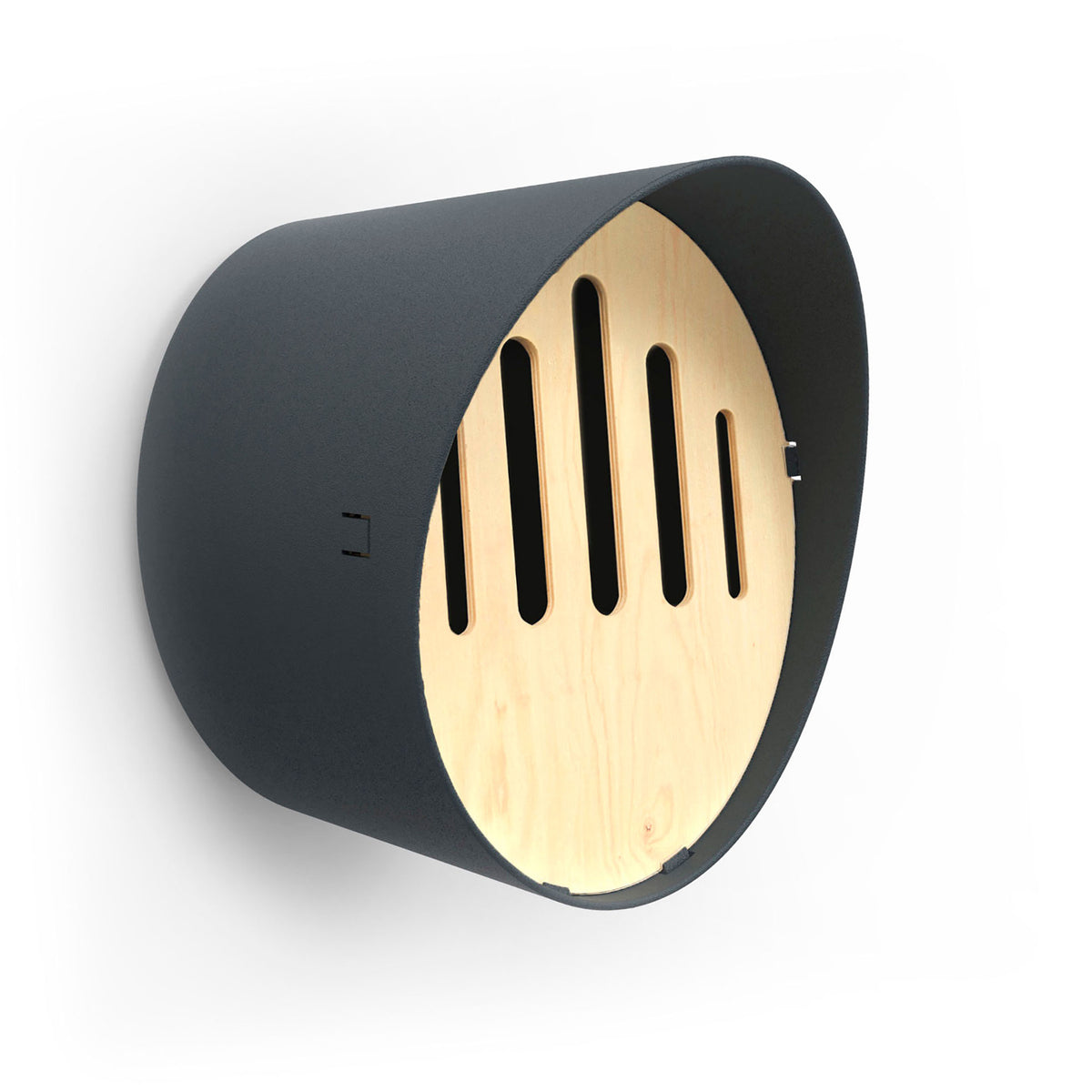
Capi Butterfly house anthracite
1x 24 x 19 x 23 cm
Currently unavailable